Free Shipping | 7-Day Easy Exchange


The Craft of Kolhapur
An 800-Year Legacy of Leather, Skill, and Resilience.
Only Leather • Luxury Segment • Size Customization
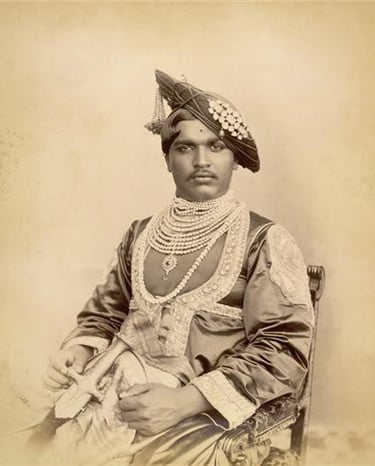
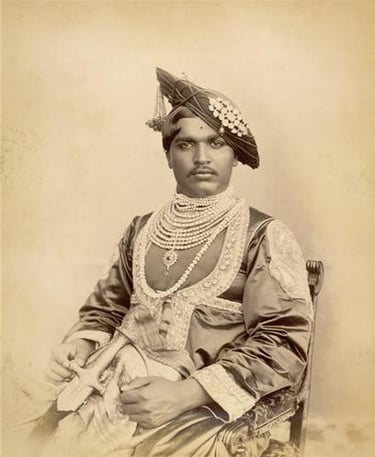
In the Era of
Chhatrapati Shahu Maharaj
A historical acknowledgment of the cultural foundations that shaped Kolhapuri craftsmanship.
Chhatrapati Shahu Maharaj of Kolhapur (1874–1922) was a visionary ruler remembered for his progressive reforms and enduring contributions to social and economic upliftment. During his reign, local industries and artisan communities across the region received structured encouragement and institutional support.
This acknowledgment is presented in reverence to Maharaj’s historical legacy, with the sole intention of sharing his enduring influence with a wider audience, without any commercial motive or claim of association.
Traditional crafts, including the making of Kolhapuri footwear, continued to evolve within this environment of stability and cultural preservation. The emphasis on empowering skilled communities helped sustain regional craftsmanship and strengthen Kolhapur’s identity as a center of artisanal excellence.
His era marked a period where cultural heritage and skilled workmanship were valued as integral parts of society - foundations that continue to influence the spirit of Kolhapuri craftsmanship today.
Archival image. Source: Public historical record.
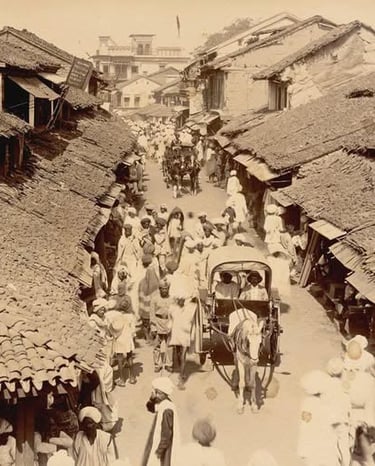
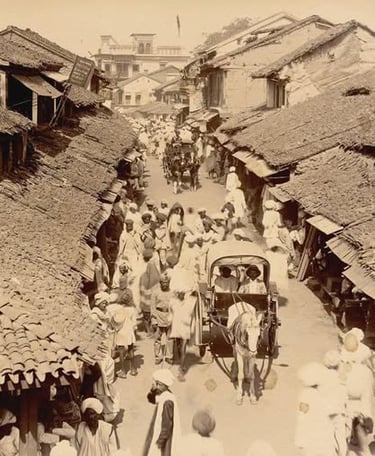
Early Kolhapur
A glimpse into the heritage city where the craft was born.
Royal Patronage Era
Traditional Market Streets of Kolhapur
Kolhapur Palace Courtyard – Early 20th Century
Old photo of Kolhapur Bazaar
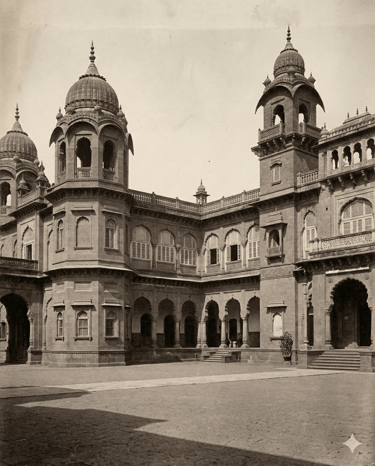
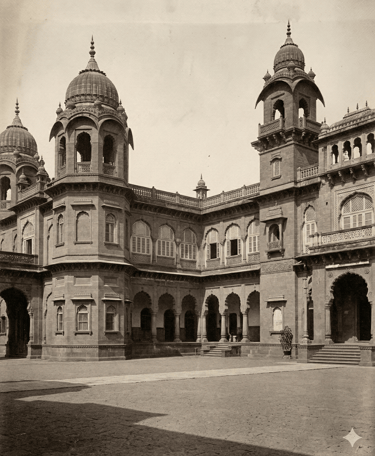
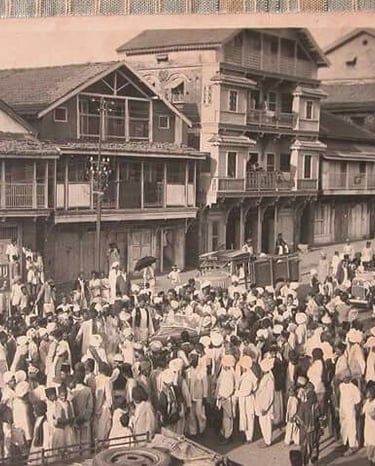
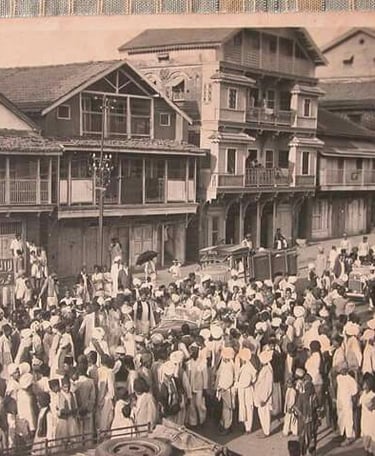
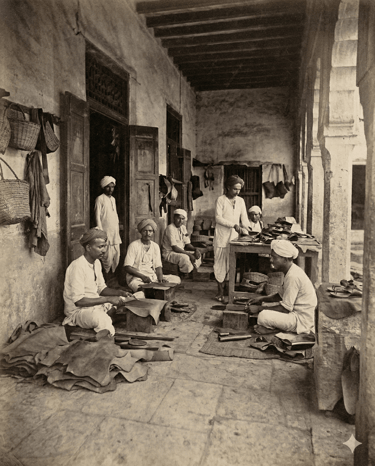
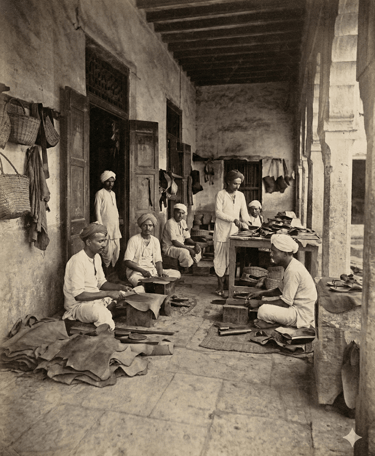
Archival image. Source: Public historical record.
A 800-Year-Old Tradition
Kolhapuri chappals trace their origins to the 12th century across the Deccan plateau. Encouraged under the patronage of King Bijjala and later refined during the reign of Chhatrapati Shahu Maharaj, the craft evolved from durable agrarian footwear into a symbol of regional pride and royal endorsement.
Recognized under Geographical Indication (GI) across eight districts of Maharashtra and Karnataka.
Crafted By Skilled Hands
Every pair of Kolhapuri chappals is shaped, stitched, and finished by experienced artisans. The process demands precision, patience, and generations of knowledge passed down within families. What begins as raw leather transforms slowly into a product of skill and dedication.
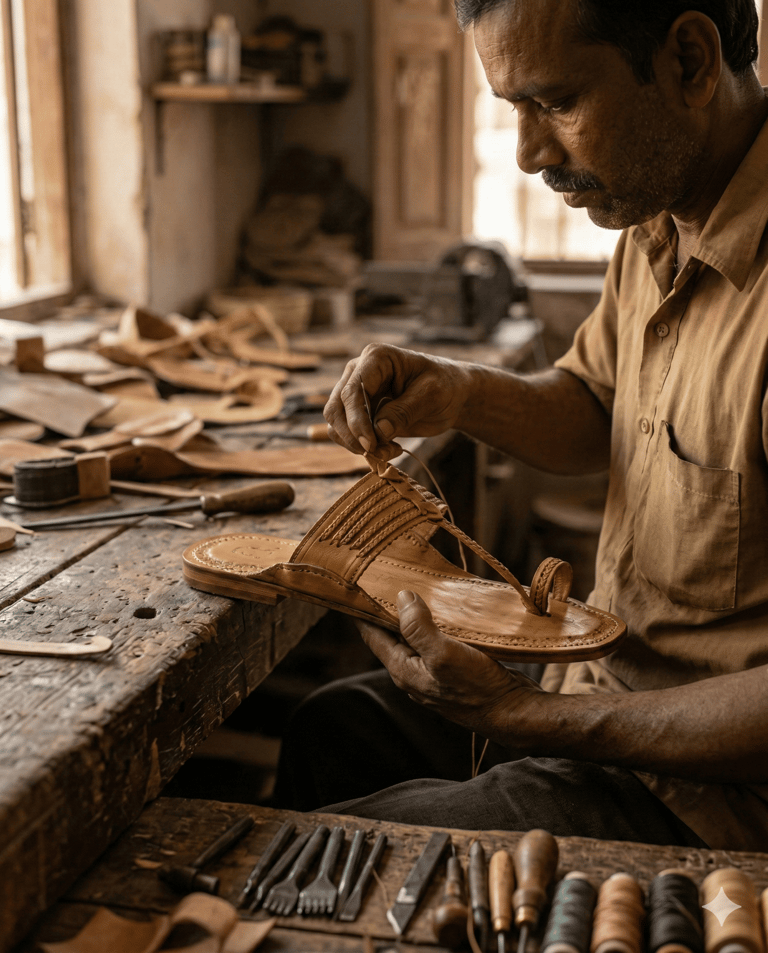
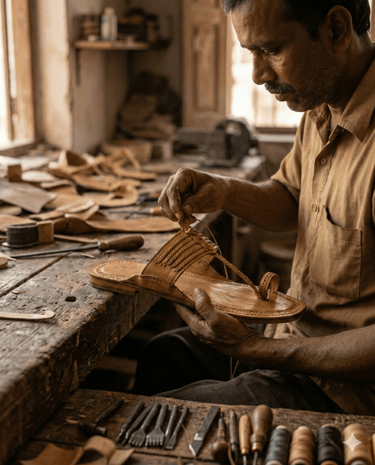
“Handmade, one pair at a time.”
02 Hand Cutting
01 Leather Selection
Each component is manually cut using traditional tools for precision.
Premium full-grain leather is carefully chosen for durability and natural texture.


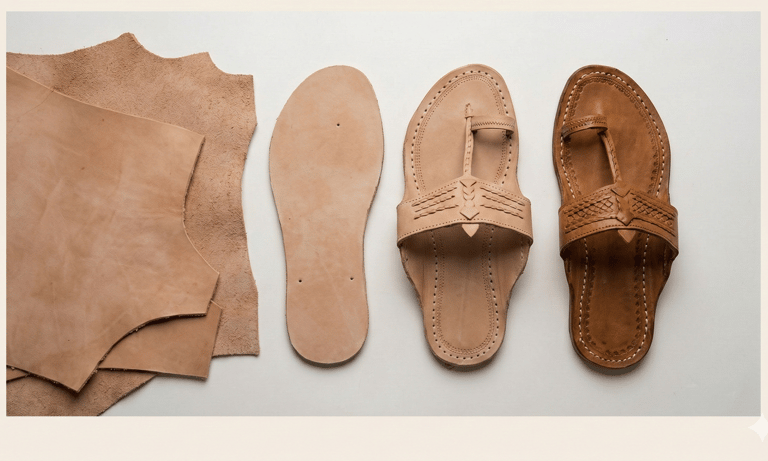
From Leather to Legacy
04 Finishing & Polishing
03 Hand Stitching
Natural oils and finishing techniques refine texture and longevity.
Straps and soles are stitched entirely by hand to ensure strength.
Structured Sole Support
Designed for balanced footing.


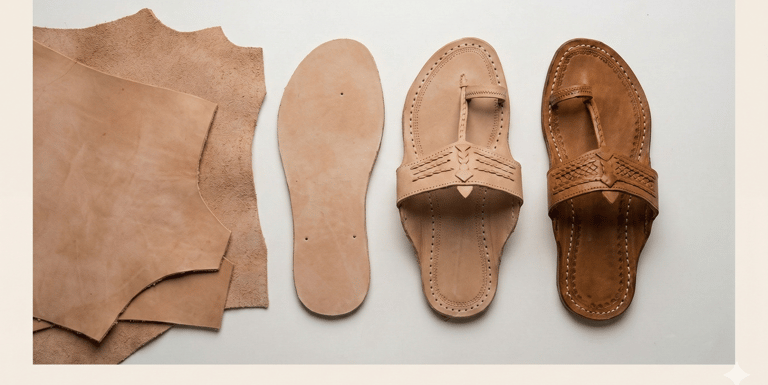
Tradition Meets Comfort Engineering
While rooted in centuries-old craftsmanship, our Kolhapuris are refined for modern wear. We enhance traditional construction with structured soles, improved grip, and comfort-focused design to ensure stability during long ceremonies and everyday movement.
Anti-Slip Grip
Stable on polished and ceremonial surfaces.
Crafted for extended wear.
Maintains heritage while improving usability.
Comfort-Focused Build
Refined Finishing
Authentic Materials. RecognizedHeritage.
We use genuine full-grain leather and traditional hand-construction methods rooted in Kolhapur’s legacy. Kolhapuri chappals are protected under Geographical Indication (GI), recognizing the craft across designated regions of Maharashtra and Karnataka.
Crafted in Kolhapur. Rooted in protected heritage.
Crafted for Generations.
House Of Kolhapuri carries forward centuries of craftsmanship, blending heritage techniques with modern refinement to create footwear designed to be worn, remembered, and passed on.
|
Newsletter
© 2026. All rights reserved.

